Early last Sunday I left The Dalles and headed for Yakima. I found a series of caches placed in a canyon west of town which would take me to someplace new. I had never heard of Waterworks Canyon . This is just the thing I had hoped Geocaching could do for me, take me to new and different areas.
The trail head is just past the junction where Hwy 12 and 410 split on their way to Mt Rainier and the trail climbs Waterworks Canyon up into the Oak Creek Wildlife Management Area. I was happy to find early blooming Balsamroot. There are always bugs in the Balsamroots and yet again, the olive drab spotted bugs were here in abundance. I have still not been able to find the name of these bugs, but they are everywhere in the Balsamroots.
Low in the canyon the slope is softly edged and grassy. They is a noisy creek that the trail follows and today it is sunny and absolutely windless. A fine change from the day before.
It is early in the blooming season yet, but I did find a few violets and some pretty vetch. Got another happy bug photo, too!
Further along, Mertensia bluebells were just getting started. There are several types that grow in the state, I believe these are long flowered , longiflora
The placer of many of the caches along this trail made sure to point out areas of interest and things that might be seen. He warned about rattlesnakes and I made sure when reaching into holes and rock piles to use a poking stick to rouse a snake that might have slept in.
I didn't see a single slithery thing except a Horned Toad. Better luck next time, I guess.
But at the box called "A Good Place To Rest" I did spy some gems. He mentioned that seeing Big Horned Sheep was possible and sure enough, high on the ridge line I saw one, then two then more and more.
Across the canyon I saw deer, equally high up.
The way continued up and the land form transitioned from soft rolly slope to sharp volcanic stone. There were some stone arches and many spires. Footing was sometimes rubble with pumice and other rock types
One cache was hidden in a ledge in a rock wall. It required a little climb up. All the stone here is covered in lichens.
I can imagine a native hunter spending a safe night in this alcove.
One fun discovery along the way was Chukar. These game birds are reluctant to fly and usually run away. If you are lucky they will make a small gabbling type sound and you can spot them, otherwise they blend in pretty well. Poor Chukar, they are not the brightest of birds and often then will fly down a hill then walk back up.
Can you spot him there in the rocks at the bottom?
About half way along the trail someone had placed a box high on a ridge than branched off from the canyon. As this is fine open country, you do not really need a trail and I decided to try a bee-line navigation straight up the ridge. It was a good solid workout and just the thing I need. The view down to the canyon floor was pretty impressive. It is hard to appreciate it here, but those trees along the creek are actually pretty tall. This was a good solid 1000+ feet up.
I followed a lot of hoof prints figuring the sheep and deer likely knew the best footing and the easiest way. They were pretty correct. When I got to the top I saw where the canyon trail actually rose to parallel the slope, so I could have gained some elevation a little easier by following the trail further before attacking the slope. Ah well that is hindsight, I guess.
I trekked to the end of the line. From there I could see that you could simply climb out of the canyon and camp on top of the plateau.
It was a fine hike. I met one other couple along the way and they went as far as I did, reluctant to proceed up the final slope without a trial.
What a great end to the weekend. As I descended the sun started to make its presence known. This dry area always feels extra warm and when I hike over in this area I always like to finish before the blazing heat of 2pm. These little lenticular clouds are not going to help block the sun.
A great little hike. A little excitement as I attacked that tough slope. A little challenge of navigating some tricky rocky places. Fun animal sightings, some pretty flowers and even some bugs.
I evicted a tick, found walking along my steering wheel. Clearly it climbed from my arm and I am sure the good people of Ellensburg will not mind that I ejected this freeloader on the freeway interchange.
I still feel a little creepy crawly.
Ramblings around Washington State. Natural wonders of my world. I am forever trying to learn. Strong caution, pictures of plants may include bugs,spiders and other "creepy" things. Natural history plants flowers bugs birds biologies. Geology weather conservation and gentle hikes.
About Me
- Upupaepops
- Just a meandering soul sharing my backyard. Visit my Flickr page too! www.flickr.com/photos/meanderingwa/
Showing posts with label Balsamroot. Show all posts
Thursday, April 19, 2012
Sunday, May 8, 2011
My High Lonesome Place
It really isn't lonesome. Umtanum Road , south out of Ellensburg, is a popular place.
But I love coming up here as the horizon and views are so big.
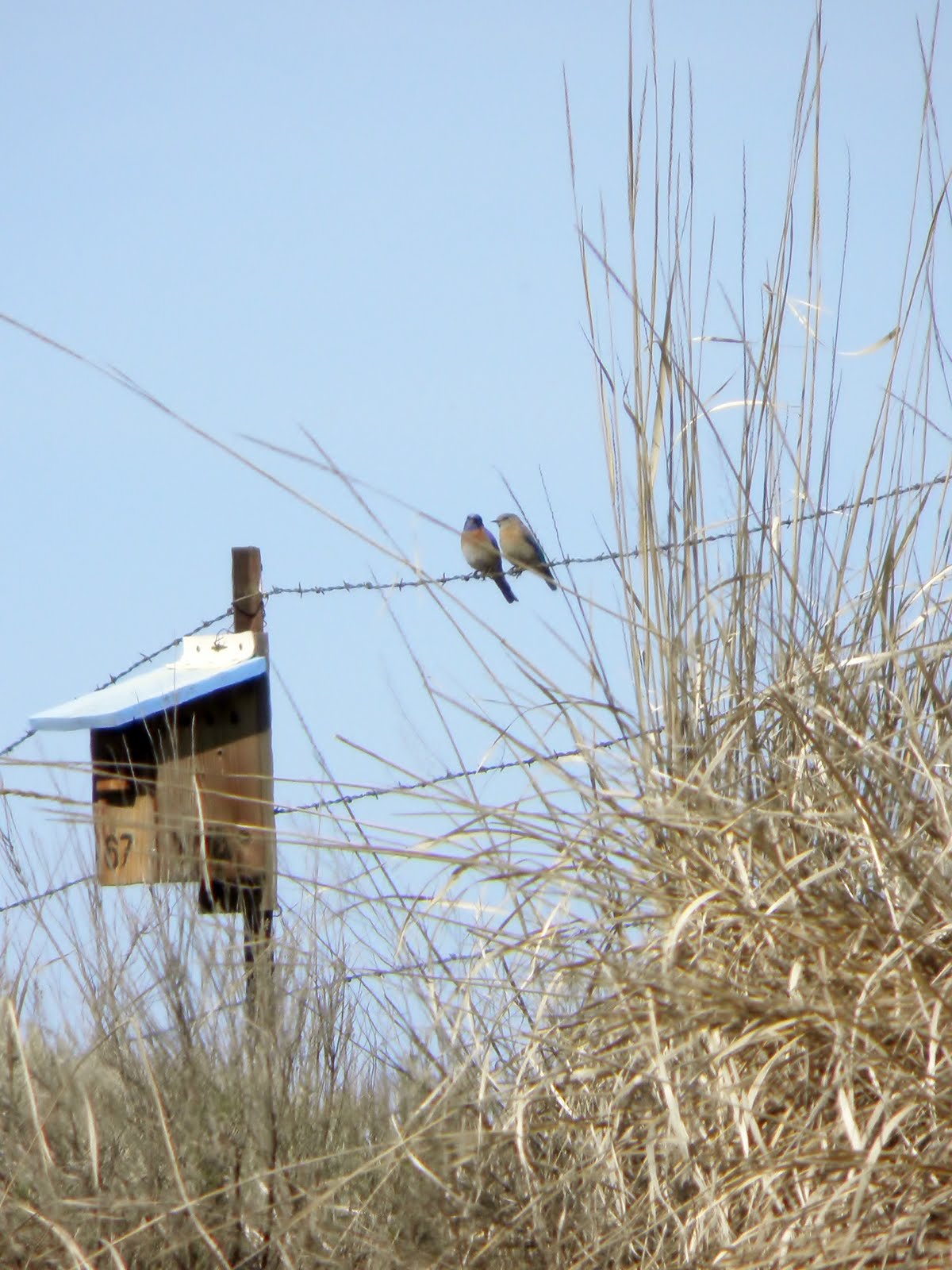
Usually it is quite windy, but last weekend there was barely a ripple of wind. All over the flowers were coming up and the Bluebirds were courting.
I stopped at the "stage stop" Somewhere I read that these building were a stage coach stop. I love coming here and imagining what it was like to live above the valley, shut off from the world.
On this day, as I pulled up, a truck was pulling away. I got out to take my pictures and I noted that the truck had turned around and was coming back.
The driver pulled up and rolled down his window.
"You taking pictures of the old place?"
"Yes" I said, "this is one of my favorite places"
"I grew up here." the gent said.
Yes indeed. This was his childhood home. He lived with his Grandparents during WWII on this land which was a wheat ranch. No water or electricity, his grandfather worked the land with horses. He pointed out the barn, one of which has fallen down in the last year. He said that he had been sick over the Winter with heart surgery and wanted to see "the old place" before more fell down.
I told him of once seen a blooming rose bush at the house and how I imagined the woman who likely lived here, nursing a bit of pretty.


But I love coming up here as the horizon and views are so big.
Usually it is quite windy, but last weekend there was barely a ripple of wind. All over the flowers were coming up and the Bluebirds were courting.
I stopped at the "stage stop" Somewhere I read that these building were a stage coach stop. I love coming here and imagining what it was like to live above the valley, shut off from the world.
On this day, as I pulled up, a truck was pulling away. I got out to take my pictures and I noted that the truck had turned around and was coming back.
The driver pulled up and rolled down his window.
"You taking pictures of the old place?"
"Yes" I said, "this is one of my favorite places"
"I grew up here." the gent said.
Yes indeed. This was his childhood home. He lived with his Grandparents during WWII on this land which was a wheat ranch. No water or electricity, his grandfather worked the land with horses. He pointed out the barn, one of which has fallen down in the last year. He said that he had been sick over the Winter with heart surgery and wanted to see "the old place" before more fell down.
I told him of once seen a blooming rose bush at the house and how I imagined the woman who likely lived here, nursing a bit of pretty.
He told me that back in the day the area had pronghorn and jack rabbits and plenty of rattle snakes. I told him that I had never seen any of these creatures in Washington State.
We chatted for some time and he mentioned some of the other pioneer families of the valley and where they had lived and worked. He told me he remembers working land in the Colockum up above what is now Ginko Petrified State Park. They pulling up petrified wood stumps from the ground. I considered that if they had known the value back then, he would have a pretty retirement today.
His wife said they were active in the community and I mentioned that the historical society would certainly love stories of everyday life in those days. I thought that a history student at the University might certainly take interest.
What a great start to a perfect day. Full of light and flowers and my big place. Across the road from the house is a little pond and today a pair of Red-winged Blackbirds clearly showed that this was THEIR home.
But they allowed my to look for flowers.
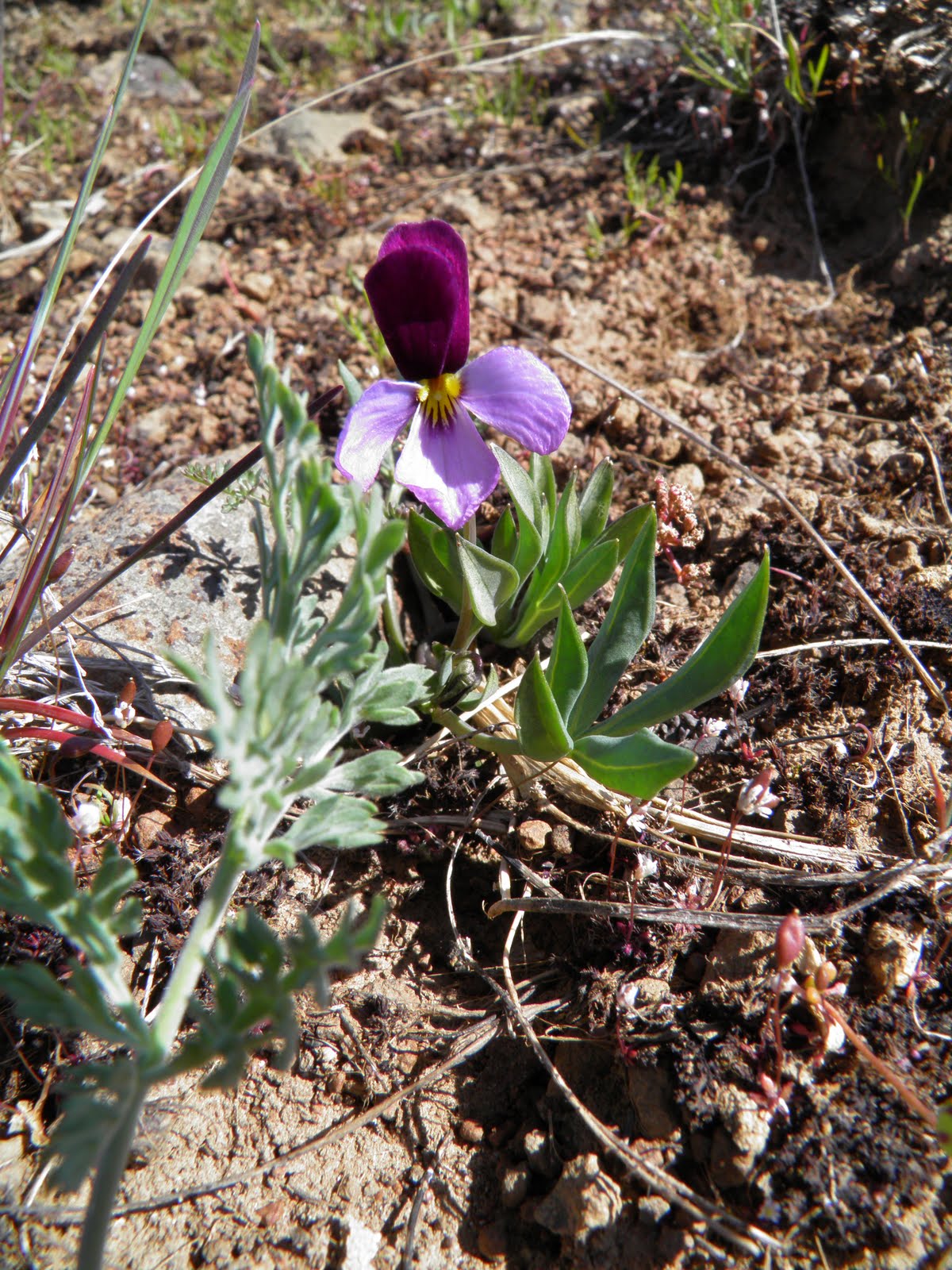
Sagebrush Violet
The first Bluebells of the year
Hesperochiron , which looks a lot like a wild strawberry. (bugs)
Saturday, March 20, 2010
Friday Getaway
I needed an escape and took advantage of the quiet before the storm at work to grab a day off. With the new season there are so many places to get to as they wake up. I headed for one of the most isolated, seldom visited areas of the state.
Driving east on I-90 you take a right after the bridge at Vantage and very soon are at the town of Mattawa. Here there has been a real boom in fruit and grape cultivation. The apple trees are just starting to bud.

.JPG)
Arriving at the Wahluke Wildlife Area, this Horned Lark could not be bothered to stop singing from the entry sign.


Hanford.
Not really Hanford, inside the loop of the Columbia River. That place with reactors and cores and armed guards and security checks. I have had the privilege of visiting inside the reservation proper as well as the ALE, Arid Lands Ecology unit to the immediate west. I also once made a wrong turn and wound up at one of the sentry gates.
No I visited the wildlife areas to the north; Saddle Mountain and White Cliffs both part of the Wahluke Slope National Wildlife Area part of the Hanford Reach NWR.
This is desert sage brush country. The Hanford reservation, in some spots, gets less than 10 inches of rain per year
It was lovely. There was very little wind, characteristic of other parts of the eastern Washington region. The temperature was just perfect and of course the day was perfect and blue.
Some people might think that there is little life out here. It was a quiet day, I will admit but when you get out and start looking closely, you quickly figure out that a lot of life out here is very small.
Driving east on I-90 you take a right after the bridge at Vantage and very soon are at the town of Mattawa. Here there has been a real boom in fruit and grape cultivation. The apple trees are just starting to bud.
Most of the land here, however is harsh. Many sand dunes form off the west and south face of the Saddle Mountains. The area north of the Saddle mountains, which rise about 2000 feet from the surrounding land, is highly irrigated and under cultivation.
South of the mountains all the area for about as far as the naked eye can see is the Hanford Reservation. The Hanford Reach has recently been put under further federal protection as it is the last of the free flowing Columbia River. In the picture below you can just see some of the buildings of the Hanford site. All of the area to the left of the river is the high security restricted area.
Arriving at the Wahluke Wildlife Area, this Horned Lark could not be bothered to stop singing from the entry sign.
The road would steadily uphill for about 4 miles. I caught a quick glimpse of a Chucker and I could hear Meadowlarks singing all about.
At the top there are no formal trails. You are just able to ramble all over the upper slopes. The south slope is covered in grasses and rocks. Many of the rocks have extensive populations of lichens.
The north face of the mountains show the effects of the Bretz Floods and they are sheer rock face scoured off as the mountain range channeled the massive floods at the end of the last Ice Age.
I was a bit dismayed at first, thinking that there was little in the way on new Spring growth but I found many Woolly-pod Milk Vetch patches.
Further down slope the Balsamroot was starting to bloom. I was delighted as Balsamroot attracts so many bugs.
It is a bug eat bug world!
I drive back down to Hwy 24 and east a little way then entered onto the Hanford reservation proper. White Bluffs is a wonderful spot along the Columbia River as the face of the hills is old sand dune , rather than the more familiar basalt and other rock face to the north and south. The road ends at the old historic village of White Bluffs. The only remaining structure is a shack that was said to be the blacksmiths building. A stunning, stark area. You can easily ramble for miles and you will likely see no one once you are beyond the parking area.
Here Spring has not quite arrived. I did find some Yellow Bells which seemed to love the sandy dry soil. They were quite a surprise in this harsh environment.
I look forward to getting back here in a month and see how the Spring is progressing. The season is short as soon the lack of moisture and the brutal heat will take its toll.
The Hanford Reservation and the Yakima Military Reservation immediately to the north form two of the largest protected ecology areas in the state. The rare and sensitive sage and upland areas are home to species that exist no where else in the state. We are fortunate that there is ongoing efforts to protect these sensitive areas.
Labels:
Balsamroot,
Hanford Reach,
Horned Lark,
Wahluke Slope,
White Bluffs
Subscribe to:
Posts (Atom)