
I worked this property twice before over the last few years. Our fist time in involved pulling English Ivy off of the tree trunks. English Ivy sets flowers and goes to seed once it is allowed to climb. In this climbing they produce very thick stems which fuse and can choke a trees circulation. Allowed to proliferate, the weight of the ivy can pull over a tree. As the ivy runs along the ground it crowds out native species.
The way to the property is off the freeway on a ramp that does not have anything immediately near it but a golf course. Through the golf course and down a road which has a few old houses next to it. It is as though these little houses, long cut off by NWR, Joint Base Lewis McChord and the golf course have settled into a time warp. It is hard to tell if anyone lives here or if the older houses are just being held as investments. A few newer houses seem to enjoy the solitude.
I bet these apples would make good cider.

We arm ourselves with loppers and extra heavy duty bags. The bags have been used over and over on projects, they are that tough. The stewards taking the bags to the dump empty them by hand, even saving the zip-ties.


Out into the property we tromp. Everyone settles in to their own patch and it is pretty quiet, save for cars zooming past on the freeway. Eventually, even they disappear into the background and my attention is drawn by bird flocks. Ahh the feeding flocks of winter are going strong. Here Black-capped and Chestnut-backed Chickadees , Red-breasted Nuthatch, Ruby and Gold-crowned Kinglets mix together to form feeding guilds. There will usually be a woodpecker as well. Often the woodpecker is the giver of alarms. Together with the different feeding styles, there is safety in numbers.
I selected a fine Cottonwood tree that had obviously been cleared before. I could see new ivy growth to attack. Here the old dead vines show well. By cutting a 1.2 to 2 foot gap in the vines, you essentially kill everything above.

Pulling back the vines at the base sometime leads to pulling and chasing vines across the woodland floor. It is almost like a game, you coil and loop up the vine as you go, striving for the longest rope possible. When it breaks you bundle into the bag and start again. So evil this vine that even a leaf dropping off can re-root and start the game again.
Empty properties around the conservation area are seeding and we can only work on our own property. New plants have been added to encourage the native growth.
I started in on my tree, picking off the new climbers.

On my hands an knees working my way through the litter of Big-leaf Maple leaves I found a ton of treasure.
Mushrooms of many descriptions.

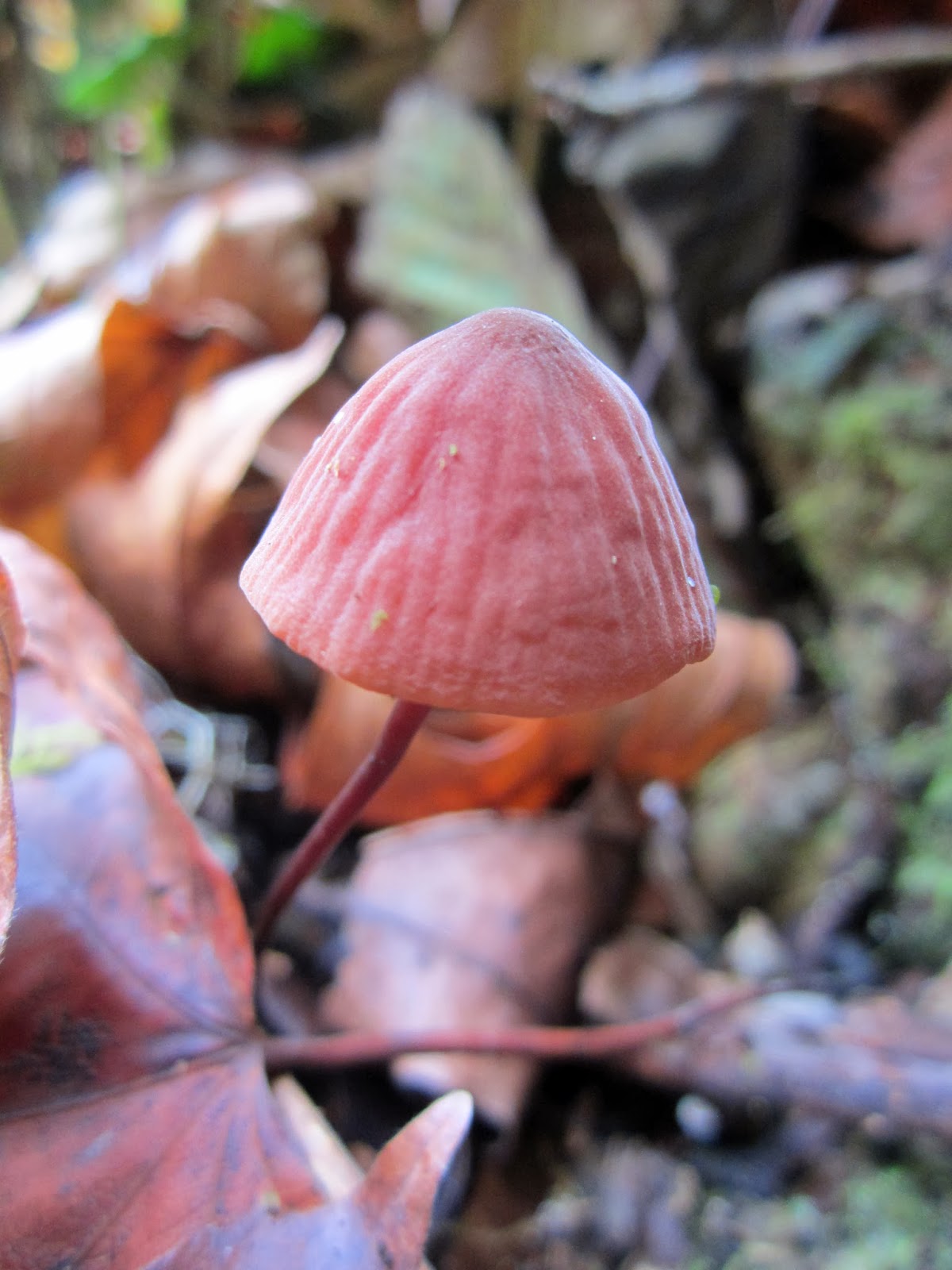


Little magic communities identity unknown. Sadly many get toppled and squished during our efforts. Deep under this leaf litter there are communities of creatures who will gladly eat on mush of what is offered. The trees themselves are supported by a nutrient highway underground, all based on a fungal network.
I found something I have never seen. A wee green mushroom had been knocked loose from its soil. I am sorry that the one photo shows a better pic of my fingerprints than the little 'shroom. When I asked one of the stewards if he had ever seen a green mushroom he said yes. His co-worker told him the name and that it is a very uncommon native mushroom.
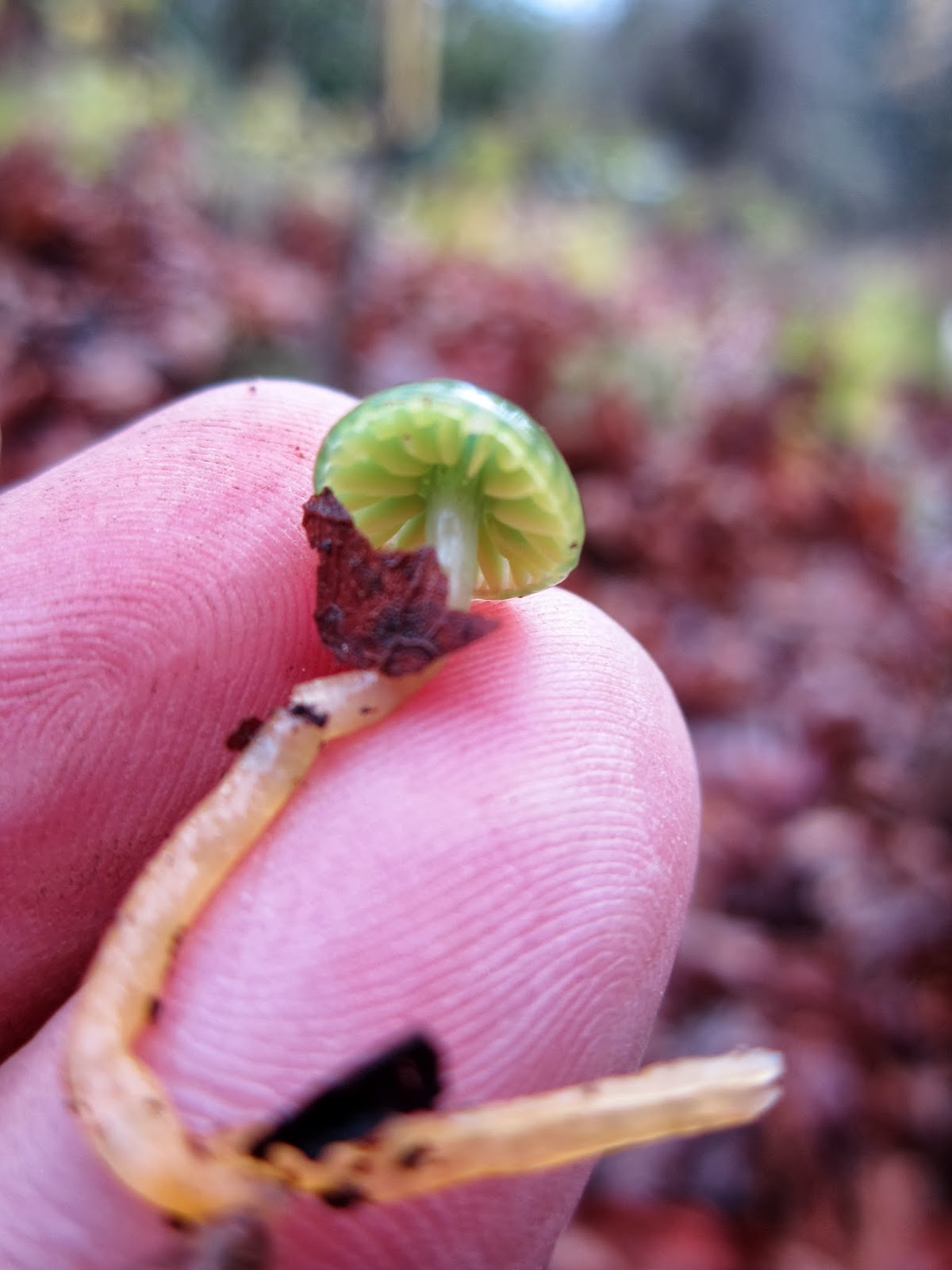

A little bit of searching turns up a possible id of Hygrocybe psittacina; Parrot Toadstool or Parrot Waxcap. I placed it carefully back on the soil so that perhaps next year more will return.
I worked three hours and tackled three different clumps of tree climbers. The last one was highly satisfying as these newly invaded trees were easy to peel and their vines ran away from the trees. It was like a game of follow the string when the vines went up down over around other trees, stump and shrubs. Even through a patch of sword fern.

In the end I hauled out 2 bags of vines and called it a day.

Once the truck was packed it is taken to the dump and each bag emptied and saved for the next use.
SEVEN HUNDRED POUNDS of ivy in 3 hours. Amazing what a small army of volunteers can do.


